
 ES
ES  FR
FR  EN
EN Latest From Immigria
We regularly update you on all the nuances of the immigration process, as well as life in Canada, and the US.

Planning to attend World Cup 2026 in Canada? Before you book flights or hotels, confirm your visa requirements.
Attending a global sporting event does not simplify Canada’s entry rules. Immigration officers assess every traveler under the same legal framework.

Have you ever rewarded a strong employee with a raise, only to later wonder, “Did we need to report this?”
If that employee holds a closed work permit under the Temporary Foreign Worker Program, what feels like a positive HR decision can quietly create an immigration compliance issue.

The world is coming to Canada for World Cup 2026, and if you are planning to be part of it, whether as a visitor, volunteer, or worker, there is one question that must be answered first:
Are you legally prepared to enter Canada?

Some couples celebrate anniversaries.
Others celebrate permanent residence (PR) approvals, work permit extensions, and citizenship ceremonies.
For María Paula & Luis Guillermo, those immigration milestones became just as meaningful. Their journey through the Canadian Experience Class (CEC) demonstrates how skilled Canadian work experience can evolve into permanent residence, and ultimately, citizenship.

If you speak French and want to work in Canada, you may be closer to your goal than you think. While many foreign workers struggle with long processing times and complex Labour Market Impact Assessments (LMIAs), there is a lesser-known but extremely powerful option designed specifically for French-speaking professionals: the Francophone Mobility Work Permit (C16).

Applying for Canadian immigration is one of the most important decisions you will ever make. It affects your career, your family, your finances, and your future stability. Yet many applicants begin their journey by relying on advice from friends, online forums, Facebook groups, Reddit threads, or social media influencers who promise “easy” or “proven” immigration strategies.

Why Immigration to Canada Now Requires a Smarter Plan
Immigrating to Canada in 2026 is still possible, but it might not be as simple, fast or predictable compared to previous years. The Canadian immigration system has changed significantly, and planning your journey today requires more than optimism or following the latest announcement online.
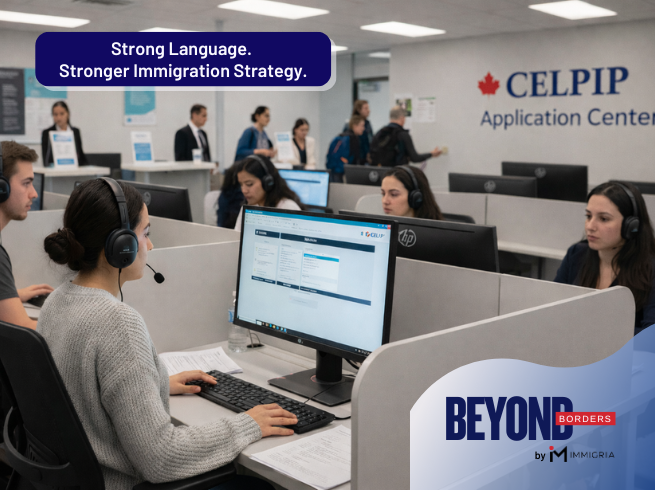
If there is one factor that consistently separates successful Canadian immigration applicants from those who remain stuck in the system, it is language proficiency.
Not job titles.
Not age alone.
Not even education by itself.
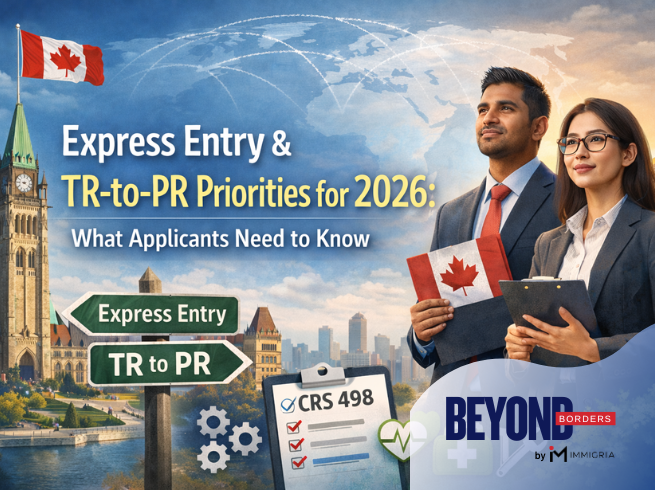
As we enter 2026, Canada’s immigration system is no longer about waiting and hoping for a general draw. It is about being prepared, strategic, and ready to act quickly.
If 2025 taught applicants anything, it is this: Immigration, Refugees and Citizenship Canada (IRCC) has decisively moved away from broad invitations and toward highly targeted selection, prioritizing temporary residents, specific occupations, and candidates who meet precise policy goals.

If you’re exploring Canadian immigration options, you’ve likely come across the Provincial Nominee Programs (PNP). These programs have become one of the most strategic and accessible ways to obtain Permanent Residency (PR), especially if your Express Entry score is not high enough or if you have relevant work and/ or study history in a specific province.

When people think about immigrating to Canada, they focus on Express Entry scores, study permits, job offers, or sponsorship requirements.
But there’s one topic that almost everyone overlooks, until it becomes a complicated and expensive situation:
Medical insurance requirements.

The message is clear: Canada wants global talent, and it’s ready to move fast.
In its 2025 Federal Budget, Prime Minister Mark Carney confirmed plans to launch an accelerated immigration pathway for U.S. H-1B visa holders, as part of the country’s new International Talent Attraction Strategy.

Many international students dream of studying in Canada, and the education field has become one of the most strategic choices, especially with the new category-based immigration pathways introduced by the Government of Canada.
Teaching and early childhood education are not only in high demand across provinces but are now recognized under Canada’s category-based Express Entry selection for education occupations.

When people think of working in Canada, they often imagine a long process full of forms, approvals, and, of course, the dreaded Labour Market Impact Assessment (LMIA).
But here’s what most employers and professionals don’t know: not every work permit requires an LMIA.
Enter the International Mobility Program (IMP), a way that simplifies cross-border hiring when the work benefits Canada’s broader economic, social, or cultural interests.
And within it lies one of the most strategic, yet underused, LMIA-exempt categories: the C20 Reciprocal Employment work permit.

Family reunification has always been at the heart of Canadian immigration, but for many families hoping to sponsor their parents or grandparents, the process has become more complicated than expected.

At Immigria Consulting Firm, we’ve seen how distance can challenge relationships, and how immigration can turn those complicated situations into new beginnings. The Spousal Sponsorship Program allows Canadian citizens and permanent residents to reunite with their loved ones and build a life together in Canada.

Turn your innovative idea into Permanent Residency (PR)
If you’re an entrepreneur with a bold idea, Canada wants to hear from you. Through the Start-Up Visa Program, the Canadian government offers innovative business founders the opportunity to obtain permanent residency directly, while building companies that create jobs and strengthen Canada’s growing innovation economy.

Immigrating to Canada is rarely a straight line, it’s a journey full of lessons, challenges, and breakthroughs. At Immigria Consulting Firm, we’ve seen countless clients turn complicated situations into life-changing opportunities. One of the most inspiring examples is the story of Gaby, originally from Venezuela, who proved that persistence and the right guidance can make all the difference.
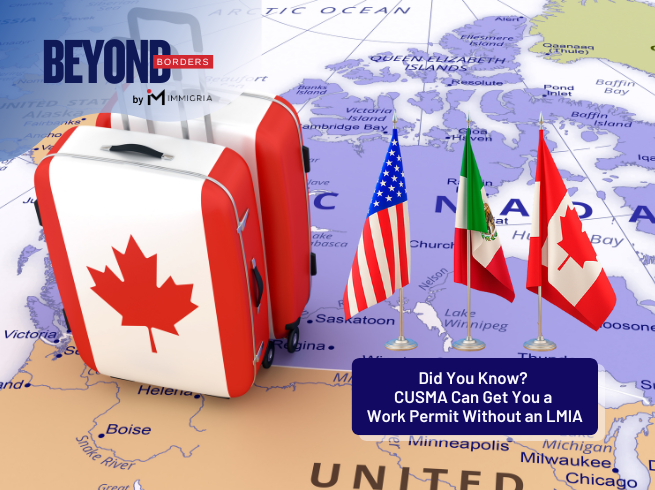
When most people think of free trade agreements, they imagine goods crossing borders, cars, technology, or agricultural products. But here’s something not everyone knows: Canada’s international agreements also open doors for people. If you are a professional, manager, technician, service provider or entrepreneur working for a company that operates across borders, these agreements can be your ticket to a Labour Market Impact Assessment (LMIA)-exempt work permit.

Your Essential Guide to Living and Working in Canada: Know Your Rights as a Temporary Foreign Worker
Moving to Canada is more than just a change of address, it’s a life-changing decision to build your future in a safe, welcoming, and opportunity-filled country. But as a temporary foreign worker or even as an international student, knowing your rights is essential. Too often, we’ve seen complicated situations arise when people aren’t informed, so protect yourself, know your rights as a temporary foreign worker, and make sure you’re never caught in one of those cases.

By Melissa, CEO & Founder of Immigria
Last July marked a special moment in my journey, 10 years since I immigrated to Canada. Milestones like this invite reflection, and I’ve been thinking a lot about the path that brought me here: the challenges, the growth, and the people who helped shape Immigria into what it is today.
I believe it’s important to show the real, human side of immigration, what it feels like to start over, to build something from scratch, and to create a life in a new place.

When people think about coming to Canada for work, they often hear about the LMIA (Labour Market Impact Assessment), the standard process that requires employers to prove they couldn’t find a Canadian for the job. But did you know that in very specific circumstances, the LMIA can be waived?

When planning your journey to Canada, one term you’ll hear often is proof of funds. Whether you’re applying for a study permit, work permit, permanent residency (PR), or even a Start-Up Visa, the Government of Canada wants to be sure you have the financial means to support yourself and your family when you arrive.

In November 2024, Quebec introduced a new immigration selection system: the Programme de sélection des travailleurs qualifiés (PSTQ). This system replaced the Regular Skilled Worker Program (PRTQ) and was designed to better reflect Quebec's economic, cultural, and social priorities.

If you've recently received a letter titled "Intention to Refuse" from Quebec's immigration authorities, take a deep breath. It’s not great news, but it’s also not a final decision. And yes, you absolutely have a chance to turn it around.
At Immigria Consulting Firm, we help clients through these complicated situations every day. Let me walk you through what this letter really means, why you might have received it, and what you can do to resolve it effectively.

When Ceren first arrived in Canada in 2016, she wasn’t just stepping into a new country, she was stepping into a new chapter of her life. Today, she leads a team of certified immigration consultants at Immigria Consulting Firm, helping individuals and families navigate the same path she once walked.
Her journey is more than a personal success story. It’s a testament to how courage, preparation, and the right support can turn uncertainty into opportunity.

Let’s be real: navigating immigration rules after losing your job in Canada isn’t easy. But it’s not the end of the road either.
If you’re a temporary foreign worker in Canada with a closed work permit and you’ve just been dismissed, let go, or laid off, this blog is for you. I’ll walk you through what you can do step-by-step, whether you have an open or a closed work permit.

Understanding the review stages, potential delays, and how to move forward with clarity
You’ve submitted your Permanent Residency (PR) application, after months of preparation, it’s finally out of your hands. But as the wait begins, so do the questions. What happens now? How long will it take? Is there anything else I should be doing?

At Immigria, we believe that every immigration journey is unique and sometimes, extraordinary. One of those stories is within our own leadership team. Leonardo, our Chief Financial Officer, is originally from Mexico and has been living in Canada since 2010. His path has been full of transitions, learning, and growth, but above all, it’s a story of determination and purpose.
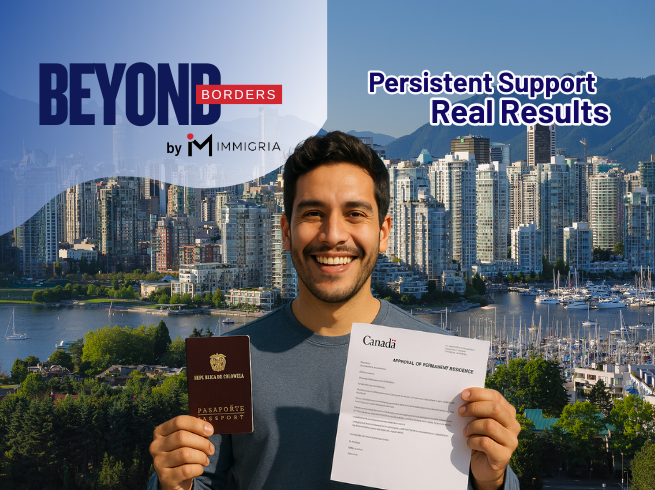
When people hear “Express Entry,” they often assume a quick and straightforward path to Canadian permanent residency. But sometimes, even a well-prepared application can stall, especially when bureaucracy and third-party processes come into play.

Understanding Opinion Request Process for Canadian Work Permits
What they are, who can submit them, and how they support your immigration strategy.
When applying for a work permit under Canada’s International Mobility Program (IMP) or at a Port of Entry (POE), some situations involve more than simply submitting standard forms and documents. In certain cases, especially when it’s unclear whether an LMIA (Labour Market Impact Assessment) or even a work permit is required, employers or authorized representatives may submit what is known as an opinion request submission to the International Mobility Workers Unit (IMWU).

What international students need to know about Canada’s Study Permit and how it supports your long-term immigration goals.
Canada remains one of the most attractive destinations for international students thanks to its world-class education system, multicultural environment, and clear immigration pathways. For those aiming to study and eventually transition to Permanent Residency (PR), understanding how the Canadian Study Permit works is crucial.

What’s the Difference Between a Refusal and a Rejection in Canadian Immigration?
If you've submitted an immigration application to IRCC (Immigration, Refugees and Citizenship Canada) and received a negative outcome, it's essential to understand whether it was a refusal or a rejection because the next steps can vary significantly.
Although many people use these terms interchangeably, IRCC treats them differently. Here's what each one means, and how understanding the difference can help you move forward with confidence.

Are you between 18 and 30 (or 35, depending on the country of citizenship) and looking to work and live in Canada temporarily? The International Experience Canada (IEC) program is one of the most accessible and flexible ways for young citizens from many countries to gain professional experience in Canada. Over 35 countries around the world have bilateral agreements with Canada, making this opportunity available to thousands of eligible youth each year.

In early 2025, our client and her family, including her husband and two children, arrived in Canada from Israel during a time of uncertainty and regional conflict. Like many families looking for safety and stability, they hoped to explore new opportunities and build a more secure future. Canada’s special public policy for Israeli nationals and their family members opened a unique path for them: the possibility to apply for Open Work Permits, for 3 years, for the couple and an adult child and a Visitor Record for a minor child without leaving Canada.

At Immigria, we’ve had the privilege of supporting people from around the world in their immigration journey to Canada. In this blog, we sat down with Kevin, a client originally from Belgium who recently obtained his permanent residency in Quebec.
Kevin arrived in Canada six years ago with a study permit and a vision for a new future. He spoke to us about the challenges he faced, including an initial CSQ refusal, and how with the right support, he ultimately succeeded.

In today’s competitive tech landscape, Canada’s Global Talent Stream (GTS) offers a fast-track solution for both employers and skilled foreign professionals. Designed to meet the growing demand for tech talent, the GTS enables Canadian companies to hire temporary foreign workers (TFWs) and allows those workers to obtain a Canadian work permit, in as little as two weeks.

When Felipe first dreamed of building a new life in Canada, he never imagined just how quickly things could change and how persistence would pay off. Today, he and his wife Shirlei are proud Canadian permanent residents, thanks to a clear strategy, flexibility, and strong support along the way.
This is the story of how they navigated the challenges of Quebec immigration, overcame policy shifts, and achieved Canada Permanent Residency (PR) in less than a year.
Life doesn’t always go as planned, especially when it comes to immigration.
Eduardo and Marisol’s story is a powerful reminder that a single rejection isn’t the end. It’s an invitation to be stronger, more honest, and more prepared. Through patience and truth, they found their way back to each other, and to Canada.

If you've ever dreamed of starting a new chapter abroad to study in Canada, to work in Canada, or to move to Canada permanently you’re in the right place. At Immigria, we believe immigration is not just paperwork or procedures. It’s about people, stories, and futures. And we’re here to walk this journey with you.

Immigration processes to Canada are increasingly complex, prompting many people to hire the services of an immigration professional for guidance. However, it is essential to ensure that the professional you hire is authorized under Canadian law. Below, we explain how you can verify your consultant's authorization and provide key information to protect your rights.

The Recognized Employer Pilot (REP) is a 3-year program divided into two phases, designed to facilitate the hiring of temporary foreign workers (TFWs) in Canada. Below, we explain the key aspects of this program in a simple and accessible way.

In 2017, the Government of Canada launched the Global Talent Stream (GTS) program to address skill shortages and streamline the process of hiring specialized global talent. Designed to process applications within 10 business days, GTS is a key tool for companies looking to employ Temporary Foreign Workers (TFWs). This guide provides detailed information about the program, its categories, requirements, processing times, and benefits.

Despite the restrictive measures introduced in recent months, obtaining permanent residency in Canada remains an achievable dream, even for those with a low score in the Comprehensive Ranking System (CRS). However, it is essential to be extremely careful with the application submitted to the government to avoid a possible rejection. There are several options available that you can consider to achieve your goal.

The Government of Canada has announced that in 2025 no new applications will be accepted for the Parent and Grandparent Sponsorship program under the Family Class. This decision allows the government to prioritize applications submitted in 2024 and ensure a more efficient processing system. With a cap of 15,000 applications, only those already in the system will be processed this year.

On January 13, 2025, Quebec reopened three permanent immigration pilot programs, offering an exceptional opportunity for foreigners interested in living and settling in Canada, specifically in Quebec. These programs provide a direct pathway to Canadian permanent residency (PR), enabling many to realize their dream of building a new life in this country.

The government of Quebec has announced key updates regarding the management of three permanent immigration pilot programs and the collective sponsorship program for refugees abroad. Here’s a detailed breakdown of what these changes mean and how they could impact applicants.

These are the options available at the start of 2025 to obtain permanent residency in Canada. If you are considering making Canada your new home, here is a summary of the key programs that will be open or continuously accepting applications as of January 1:

On December 5, 2024, the Quebec government announced new measures aimed at improving road safety by tightening access to driver’s licenses for certain immigrants. These measures are part of an ongoing effort to adapt Quebec’s driving rules in response to the increasing number of newcomers to the province.

As of December 1, 2024, Canada’s Immigration, Refugees and Citizenship Canada (IRCC) has introduced increased fees for several immigration applications. If you're planning to submit an application or have already done so, understanding these changes is essential.

The new program replaces the previous PRTQ. Structured into four categories, the program aims to select workers with different profiles, such as high qualifications, manual skills, regulated professions, and exceptional talents. It explains the application process, requirements, and general provisions.

On November 25, Canada’s Immigration Minister, Marc Miller, announced reforms to the immigration and asylum system.
Have you ever wondered how temporary residents in Canada can become new permanent residents? The journey from being a temporary resident to securing permanent residence in Canada is a significant and transformative experience for many immigrants.

Have you ever wondered about the importance of your Permanent Resident (PR) card? The PR card serves as essential proof of your permanent resident status in Canada, facilitating travel and smooth re-entry into the country, identification, integration into society, and access to services and benefits.