
 ES
ES  FR
FR  EN
EN Latest From Immigria
We regularly update you on all the nuances of the immigration process, as well as life in Canada, and the US.
From Classroom to Career: Decoding Canada's Study and Work Permits
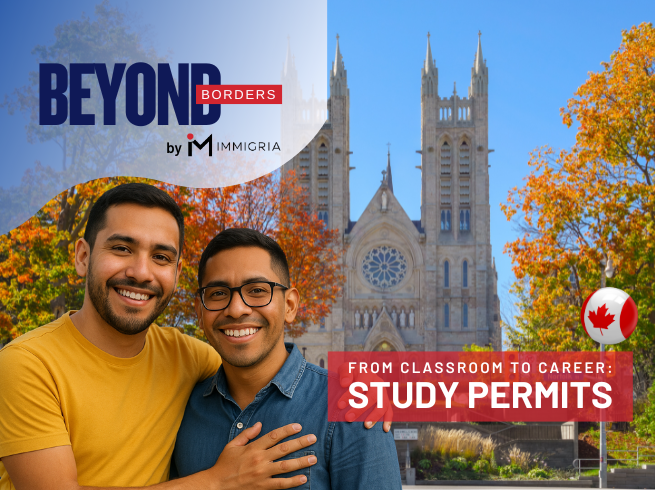
What international students need to know about Canada’s Study Permit and how it supports your long-term immigration goals.
Canada remains one of the most attractive destinations for international students thanks to its world-class education system, multicultural environment, and clear immigration pathways. For those aiming to study and eventually transition to Permanent Residency (PR), understanding how the Canadian Study Permit works is crucial.
What Is a Study Permit?
A Study Permit is an official document issued by Immigration, Refugees and Citizenship Canada (IRCC) that allows foreign nationals to study at a Designated Learning Institution (DLI) in Canada. It is required for most academic programs that are longer than six months.
To be eligible, students must:
-
Have a valid letter of acceptance from a DLI
-
Obtain provincial or territorial attestation letter (PAL), when applicable.
-
Show proof of financial support
-
Convince immigration officers that they will leave Canada after their studies, unless they qualify to stay
While the Study Permit does not authorize full-time work during studies, it typically allows students to work part-time during academic sessions and full-time during scheduled breaks, helping them gain valuable experience and support themselves financially.
Be aware that studying part-time may affect your eligibility for work authorization and future permits, including the Post-Graduation Work Permit (PGWP). In most cases, students must be enrolled full-time to qualify for off-campus work privileges and maintain compliance with immigration rules.
Changing Schools or Programs in Canada: What You Must Know
If you're planning to switch schools or programs while on a Study Permit, keep the following in mind:
📌 New school? New permit! You must apply for a new study permit if you change institutions.
📅 Starting November 8, 2024: You must be enrolled in the DLI listed on your permit. Even if you stay at the same school but change programs, you're expected to apply for a new permit.
⚠️ Don't risk your status: Failing to update IRCC about your change can put your legal status in Canada at risk.
🚫 No working during gaps: You cannot continue working during the transition ("gap") period if you're not actively enrolled in a program.
Why Choosing the Right Level/Program Matters
Selecting the right study program and institution is not just about achieving educational goals, it can also have long-term immigration implications. If you’re planning to stay in Canada permanently after your studies, in order to increase your chances, you should prioritize:
-
Programs that are PGWP-eligible
-
Fields aligned with Canada’s labor market needs
-
Institutions with strong post-graduation employment support
After completing an eligible program, graduates may qualify for a PGWP. This Open Work Permit allows them to gain Canadian work experience, a key factor when applying for PR, especially under the Canadian Experience Class (CEC) stream of Express Entry (EE) or through Provincial Nominee Programs (PNPs).
➡️ You can consult the official list of PGWP-eligible fields of study here, as published by IRCC in June 2025.
Important Note on Work Experience for PR
To qualify for PR through the CEC, only the work experience gained after graduation, while holding a valid PGWP counts. Work done during your studies, even if part-time, does not contribute to your PR eligibility.
Your post-graduation work must be full-time (at least 30 hours per week), paid, and in a skilled occupation listed under TEER 0, 1, 2, or 3 of the National Occupation Classification (NOC). You must also be physically in Canada and working for a Canadian employer. At least one year (or 1,560 hours) of experience in the last three years is required, and you must have performed most of the main duties outlined in your job’s official NOC description.
A Success Story: Manuel and Pablo’s Path to PR
Manuel and Pablo, a couple from Mexico, arrived in Canada in July 2021, filled with hope and determination to build a life together. Manuel had been accepted into the Master’s in Environmental Sustainability at the University of Ottawa, a rigorous program offered by the Institute of the Environment, a DLI.
Like many international couples, their journey was filled with both exciting milestones and moments of uncertainty. From day one, Immigria walked beside them, helping Manuel secure his initial Study Permit and assisting Pablo in obtaining an Open Work Permit as the accompanying spouse.
Their path wasn’t always smooth. As immigration policies evolved and guidelines shifted, there were times when the process felt confusing and overwhelming. Manuel and Pablo faced questions about their future, especially as they navigated transitions between permits and work eligibility. But even through those stressful moments, we were there, guiding them, answering their questions, and ensuring they stayed on track.
After Manuel completed his program, we supported him in applying for the PGWP. At the same time, we helped Pablo renew his Open Work Permit, made possible by the skilled job Manuel secured shortly after graduation. This allowed them to remain in Canada legally and continue working toward their goals.
With time, they both strengthened their English, gained authorized Canadian work experience, and significantly improved their Comprehensive Ranking System (CRS) score. By focusing on skilled, full-time work after graduation, Manuel and Pablo met the key criteria for the CEC. In February 2024, we submitted their Express Entry application, and just five months later, they were granted PR.
Today, Manuel and Pablo are not only permanent residents of Canada, they’re also on the path to citizenship. Their story is a powerful reminder that with resilience, love, and the right guidance, building a future in Canada is possible, even when the journey brings moments of doubt.
Our Role in Your Immigration Journey
At Immigria, we help students make smart, informed choices about studying and working in Canada. Our certified immigration consultants offer personalized guidance to ensure your program, institution, and long-term goals are aligned for success.
If you’re planning to study in Canada and want to build a long-term future here, we’re here to guide you every step of the way.
✉️ Subscribe to our newsletter to receive updates on immigration news, policy changes, and exclusive resources for international students.
🔗 Ready to take the next step? Contact Immigria for a personalized consultation.
📌 Disclaimer
This blog reflects the most accurate information available as of the date of publication. Immigration laws and policies are subject to change by the Government of Canada. Always consult a licensed immigration consultant or official sources for the latest updates.