
 ES
ES  FR
FR  EN
EN Latest From Immigria
We regularly update you on all the nuances of the immigration process, as well as life in Canada, and the US.
Canada’s Trade Agreements: Your Pathway to LMIA-Exempt Work Permits
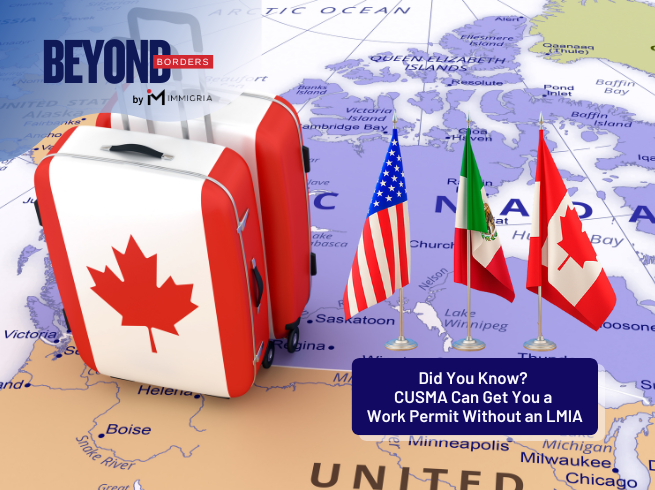
When most people think of free trade agreements, they imagine goods crossing borders, cars, technology, or agricultural products. But here’s something not everyone knows: Canada’s international agreements also open doors for people. If you are a professional, manager, technician, service provider or entrepreneur working for a company that operates across borders, these agreements can be your ticket to a Labour Market Impact Assessment (LMIA)-exempt work permit.
At Immigria Consulting Firm, we specialize in showing our clients how international trade agreements can simplify entry into Canada, creating opportunities that many overlook.
Why Trade Agreements Matter for Immigration
Canada has signed multiple bilateral and multilateral agreements that include provisions for the temporary entry of business people. Through these agreements, qualified workers can apply for work permits without an LMIA, saving time and making the process more predictable for employers.
This isn’t just a policy detail. It’s a strategic tool that allows companies to move talent where it’s needed most, and helps skilled professionals bring their expertise to Canada.
The Big Three Multilateral Agreements
There are many international agreements, but here we’ll focus on the Big Three Multilateral Agreements that impact Canada the most.
-
CUSMA (Canada-United States-Mexico Agreement)
-
Successor to NAFTA.
-
Covers business visitors, professionals, intra-company transferees, and traders/investors.
-
Example: An engineer with a bachelor’s degree who is transferred to a Canadian affiliate of their current employer may qualify for an LMIA-exempt work permit under CUSMA.
-
CETA (Canada-European Union Comprehensive Economic and Trade Agreement)
-
Applies to citizens of E.U. member states
-
Facilitates entry for business visitors, investors, intra-company transferees, and certain contractual service suppliers or independent professionals.
-
CPTPP (Comprehensive and Progressive Agreement for Trans-Pacific Partnership)
-
Includes countries such as Japan, Australia, New Zealand, Chile, Peru, and Singapore.
-
Similar categories as CETA, with country-specific commitments for professionals and technicians.
Canada’s Bilateral Free Trade Agreements
Beyond the multilateral deals, Canada has also signed country-specific agreements that contain immigration provisions:
-
Canada-Chile Free Trade Agreement
-
Canada-Colombia Free Trade Agreement
-
Canada-Korea Free Trade Agreement
-
Canada-Panama Free Trade Agreement
-
Canada-Peru Free Trade Agreement
-
Canada-UK Trade Continuity Agreement (after Brexit)
Each of these agreements gives eligible business visitors, intra-company transferees, investors, and professionals a faster, LMIA-exempt path to work in Canada.
Who Benefits from These Agreements?
-
Business Visitors - attending meetings, negotiating contracts, or participating in trade fairs (in many cases, no work permit needed).
-
Intra-Company Transferees - executives, senior managers, and employees with specialized knowledge moving to a Canadian office.
-
Professionals and Technicians - individuals in listed occupations (varies by agreement) providing services to Canadian companies.
-
Investors - those establishing or managing a substantial investment in Canada.
While every agreement has its own definition, this is the common understanding of the terms.
Why This Matters for You
If you are part of a multinational company, an entrepreneur with international links, or a professional working under the umbrella of a trade partner country, Canada’s international agreements may offer you a direct, simplified route to work here.
This is not only about paperwork, it’s about unlocking opportunities. The right immigration strategy can save months of processing time and create smoother pathways for both employers and employees.
How Immigria Can Help
Navigating Canada’s trade agreements requires precision. Each agreement has its own eligibility lists, categories, and documentation requirements. At Immigria Consulting Firm, we bring clarity to complexity.
We help:
-
Assess your eligibility under the correct agreement.
-
Prepare applications with the right supporting documents.
-
Guide companies and individuals through every step to ensure a smooth process.
If you want to explore whether Canada’s trade agreements can work in your favor, reach out to Immigria Consulting Firm, Canadian immigration services by certified immigration consultants.
Disclaimer
This blog reflects the most accurate information available as of the date of publication. Immigration laws and policies are subject to change by the Government of Canada. Always consult a licensed immigration consultant or official sources for the latest updates.